class: center, top, title-slide .title[ # <strong>Population Ecology IV: Some of All the Rest</strong> ] .subtitle[ ## .white[EFB 390: Wildlife Ecology and Management] ] .author[ ### <strong>Dr. Elie Gurarie</strong> ] .date[ ### November 04, 2025 ] --- class:inverse # Species Interactions ## Can also limit population growth .pull-left-40.large[ - Competition - Coexistence - Predation ] .pull-right-60[ 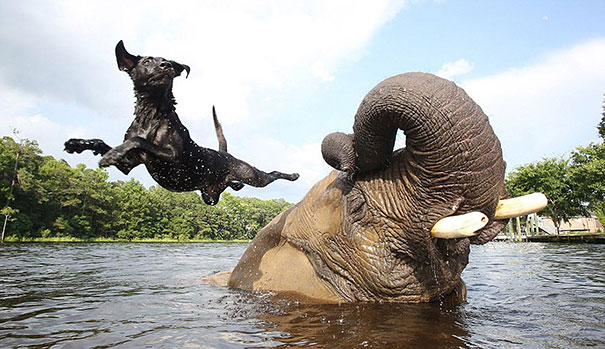] --- class:inverse # Competition .pull-left[ An interaction between organisms (intraspecific) or between species (interspecific) in which fitness of one is lowered by the presence of another. *We've already talked about* ***intra***-*specific competition!* ### Fitness is Reproductive Success - Combines **survival** and **reproduction** ] .pull-right[  ] --- ## Competitive Exclusion Principle Two species **occupying the same niche** can NOT coexist .pull-left[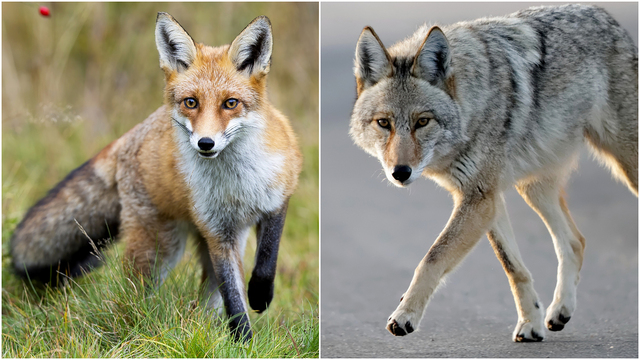 In *theory* Fox (*Vulpes vulpes*) and Coyote (*Canis latrans*) can't co-exist across southern Minnesota prairie / farmland ] .pull-right[ 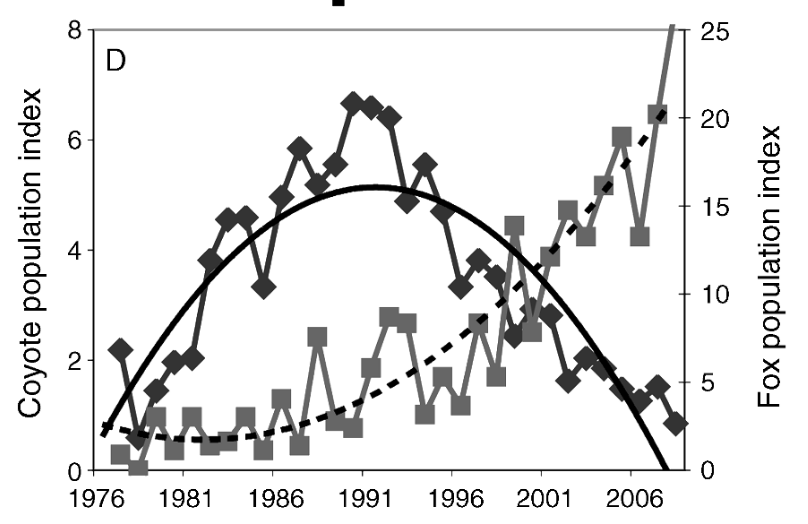 ] .center[[Levi and Wilmers (2021) *Ecology* 93(4)](https://doi.org/10.1890/11-0165.1)] --- ## Except they often do! (via niche partitioning) .pull-left[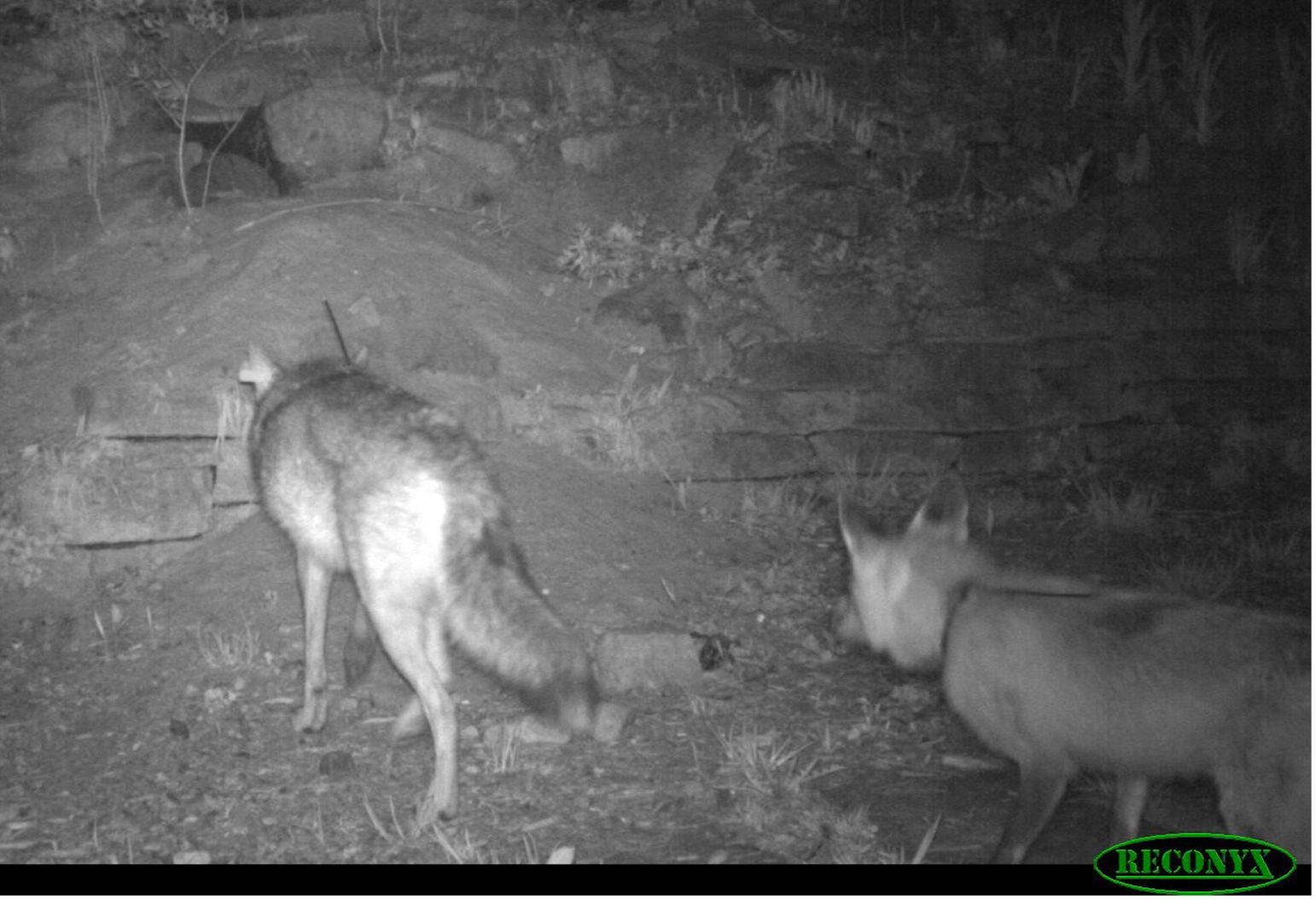  ] .pull-right-50[  Madison, Wisconsin ] --- ## Squirlicorn vs. Pegamunk Limited space | Limited carrying capacity | Mutual animosity (periodic horn skewering and/or dropping on rocks) .... .center[***Can they get along!?***  https://egurarie.shinyapps.io/SquirlicornVsPegamunk ] -- **Takeaway:** If the interactions are not *too* extreme relative to population growth rate, coexistence is possible. --- ## Apparent competition .large[Species A eats Species B and C, if Species B increases, Species C is in trouble.] .pull-left-60[] .pull-right-40[ Major habitat fragmentation from oil-gas extraction.  ***Serrouya et al. (2017)*** ] --- class: inverse ## Predation .pull-left[ 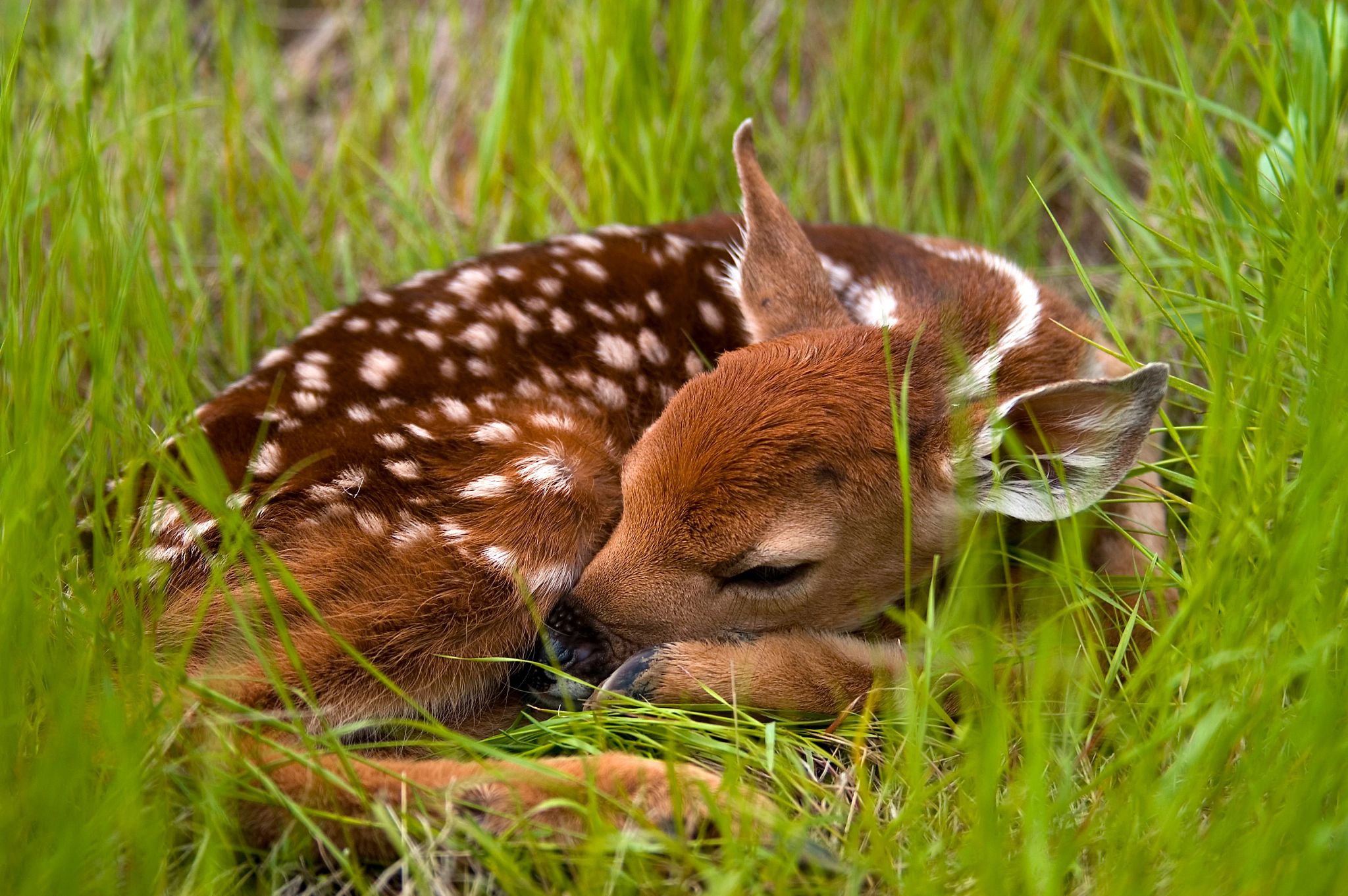 ] .pull-right.large[ an ecological process where one organism (the predator) consumes another (the prey). - Provides most of the principle route of energy flow through ecosystems - Strong selective pressure - **Chief source of density dependent effects** in regulation of many animal (and plant) populations ] --- ## Predator-prey dynamics Based (mainly) on fur sales from the Hudson Bay Company in Canada over 100 years. Roughly a 9 to 11 year, fairly synchronous, cycle. .pull-left-60[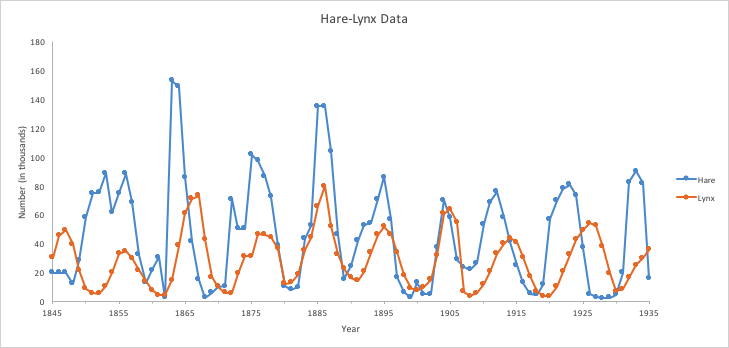] .pull-right-40[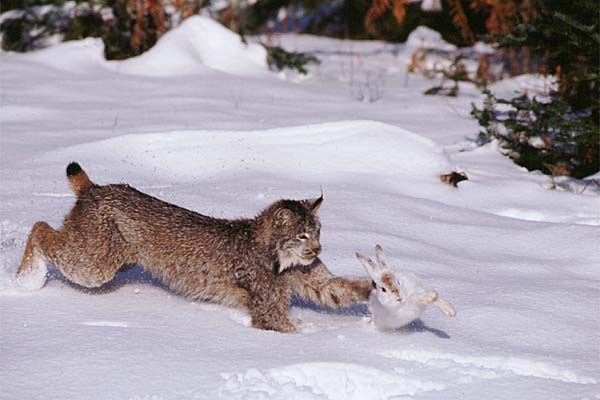] .pull-wide[ Theory suggests the **predators** and **prey** cycle ... but it turns out that is *probably* not the case.] --- ## Equations and models ### Exponential model .pull-left-40[ .red[ `\(\large \frac{dN}{dt} = r N\)` ] Basic assumption: Growth rate is proportional to population size ] .pull-right-60[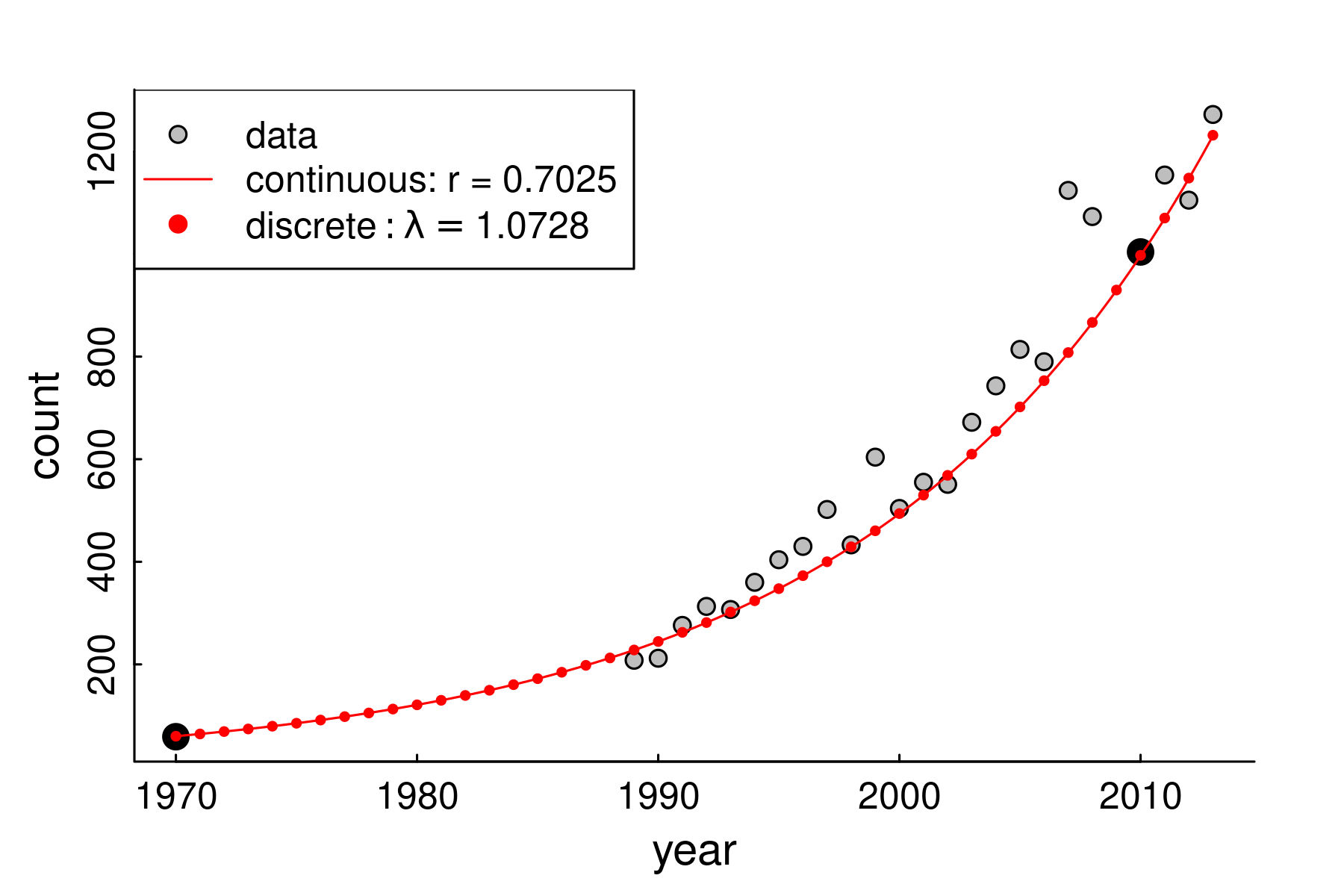] --- ## Equations and models .pull-left[ ### Exponential model `\(\large \frac{dN}{dt} = r N\)` .red[ ### Logistic model `\(\large \frac{dN}{dt} = r N \left(1 - \frac{N}{K}\right)\)` ] Assumption growth rate goes to 0 at `\(N=K\)` ] .pull-right-50[] --- ## Competition model .pull-left[ .red[ `$${dC \over dt} = r_c C\left(1- {C\over K_c} - \alpha {F \over K_c}\right)$$` `$${dF \over dt} = r_f F\left(1- {F \over K_f} - \beta {C \over K_f}\right)$$` ] contains carrying capacities AND interactions ] .pull-right-50[] --- ## Predator-Prey Model .pull-left-30[ .darkred[ `\(\large {dP \over dt} = -q P + \gamma VP\)` ] .blue[ `\(\large {dV \over dt} = r V - \sigma VP\)` ] ] .pull-right-70[] --- ## Predator-Prey-Prey Model .pull-left-30[ Wolf equation `\(W(t)\)`: $${dW \over dt} = (\gamma_m M + \gamma_c C - \delta)W $$ Moose equation `\(M(t)\)`: $${dM \over dt} = r_m M \left(1 - {M\over K_m}\right) - \sigma_m MW $$ Woodland caribou equation `\(C(t)\)`: $${dC \over dt} = r_c C \left(1 - {C\over K_c} \right)- \sigma_c CW $$ ] .pull-right-60[  ] --- ## **To learn more:** 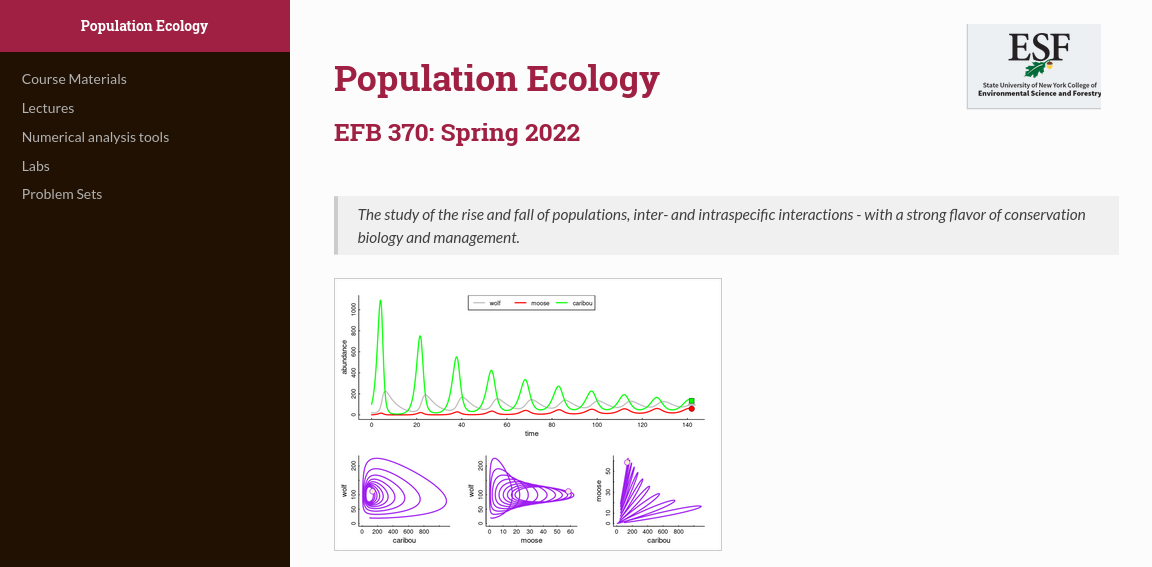 ] --- ### Take-aways .... .pull-left[ ### Top-down Sometimes predation is extremely important at limiting growth of prey populations. 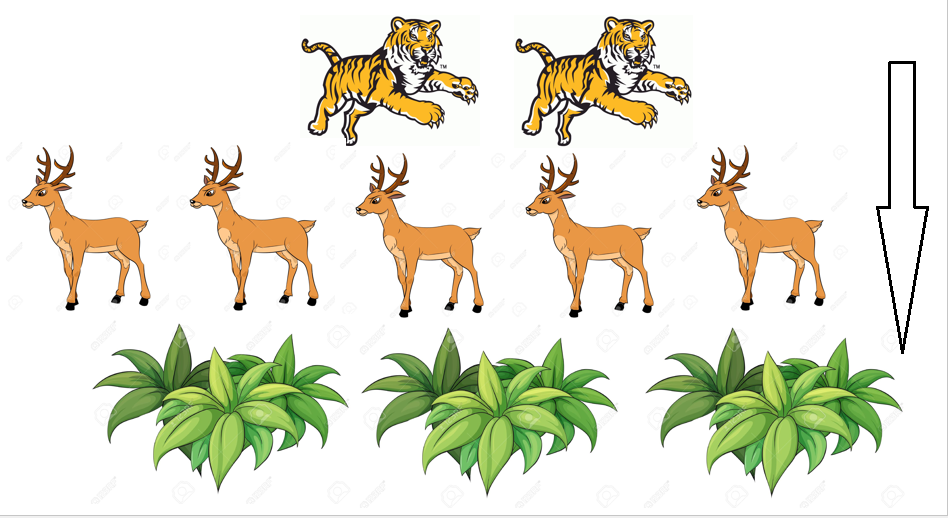 ] .pull-right[ ### Bottom-up Sometimes, predators are very much limited by the resources coming up the chain. .pull-right-60[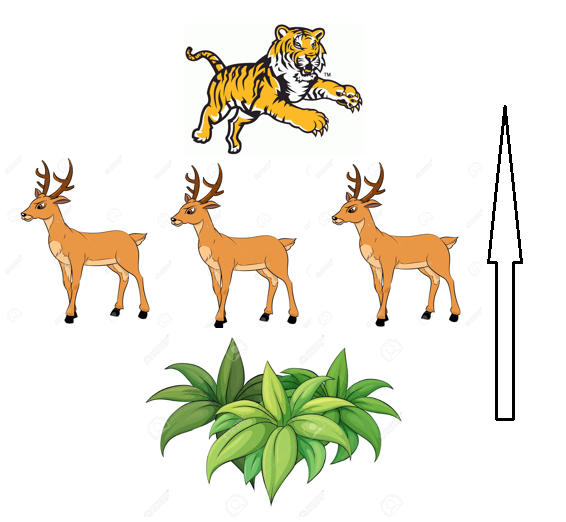] ] .large[ Resolving these questions is hard! (and interesting), and involves a combination of deep ecological research and modeling.]